Holds its R-value down to −30°C.
Cold rooms live or die on their insulation. High-density TKG EPS keeps performing under continuous freezing cycles and structural load.
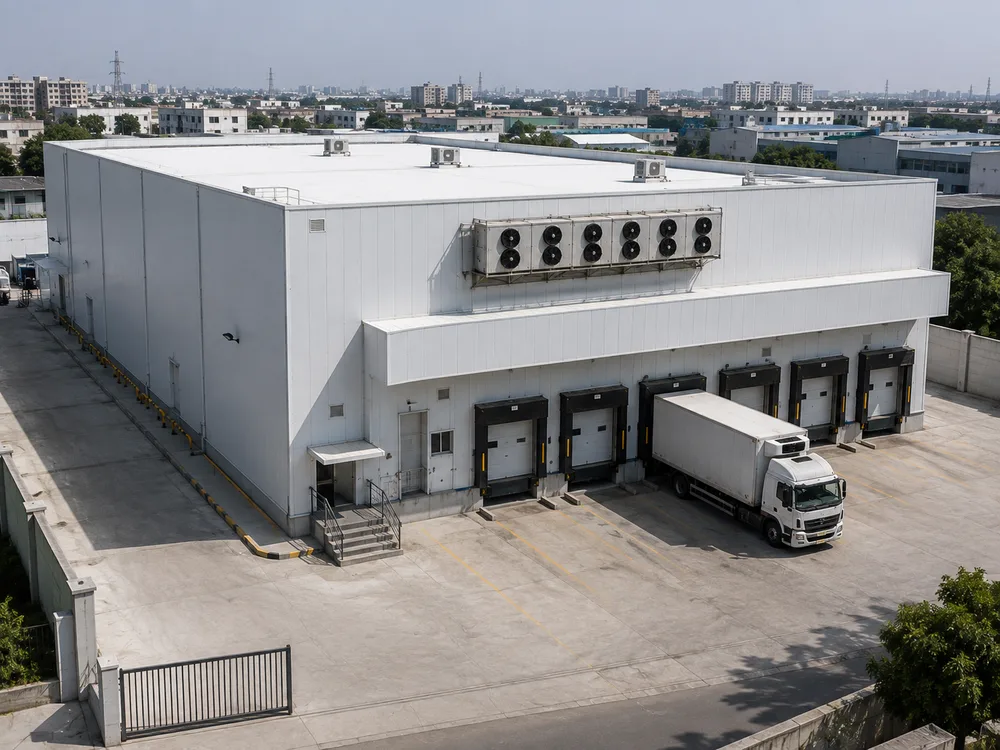
Where the cold chain depends on it
Cold room walls & ceiling
Primary insulation boundary. High-density EPS in a sandwich panel configuration with vapour barriers.
Under-floor slab
Prevents frost heave, ground moisture freezing and lifting the structure. Critical for any freezer floor.
Pharma & blood bank rooms
Precise 2-8°C control. Non-toxic, non-reactive, compatible with GxP and food-safety compliance.
Roof insulation
Built for continuous freeze-thaw cycles and structural load.
This is the layout for a typical cold storage setup. Depending on what's being stored and your facility's specific requirements, the exact application method can vary a lot, this is assessed during the site survey.
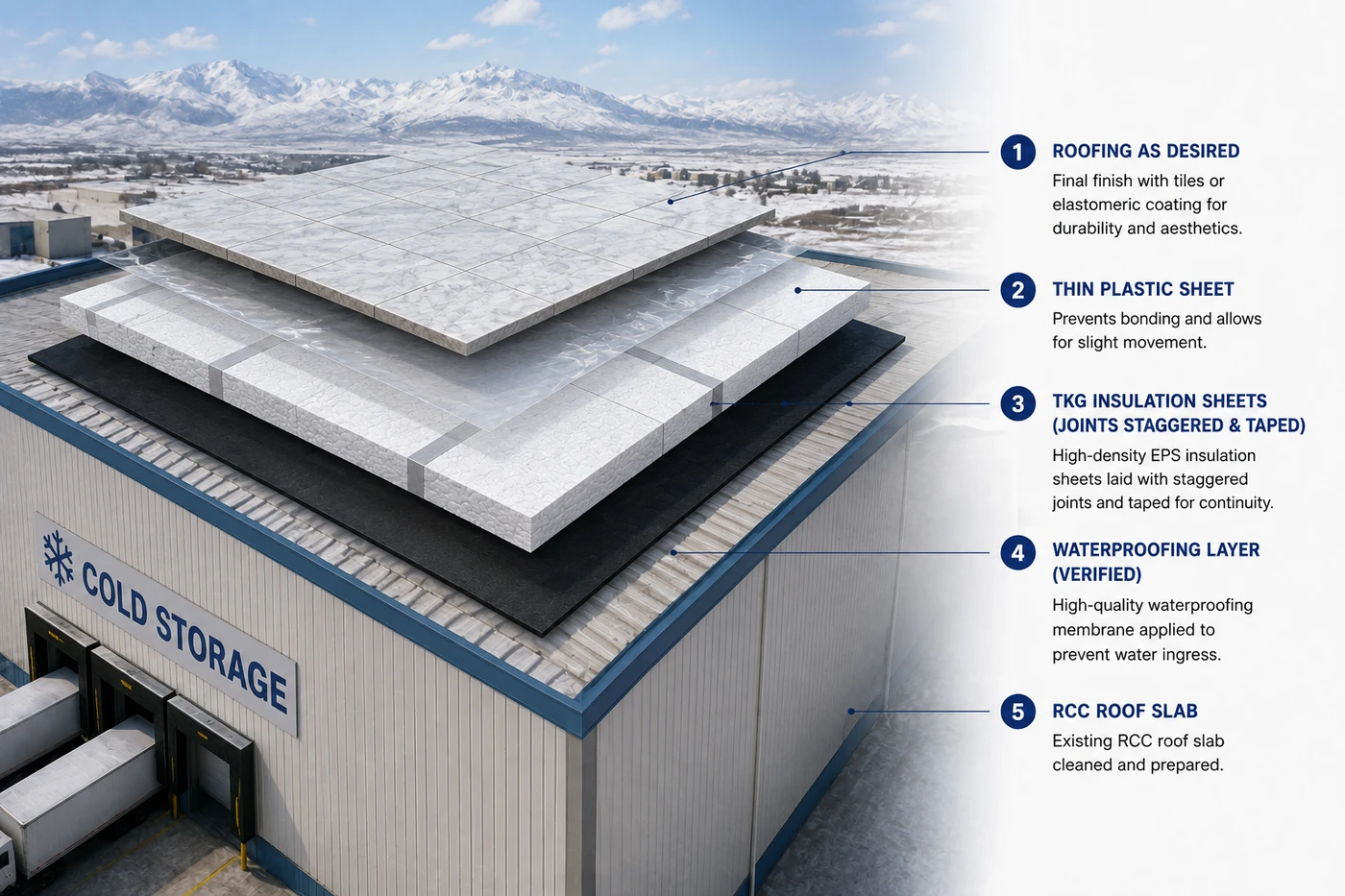
Roof Insulation
Waterproofing is verified before any sheets go down. Staggered, taped joints keep the thermal boundary continuous with no gaps for heat to sneak through.
Wall & floor insulation
Compressive strength for continuous load, plus frost heave protection underfoot.
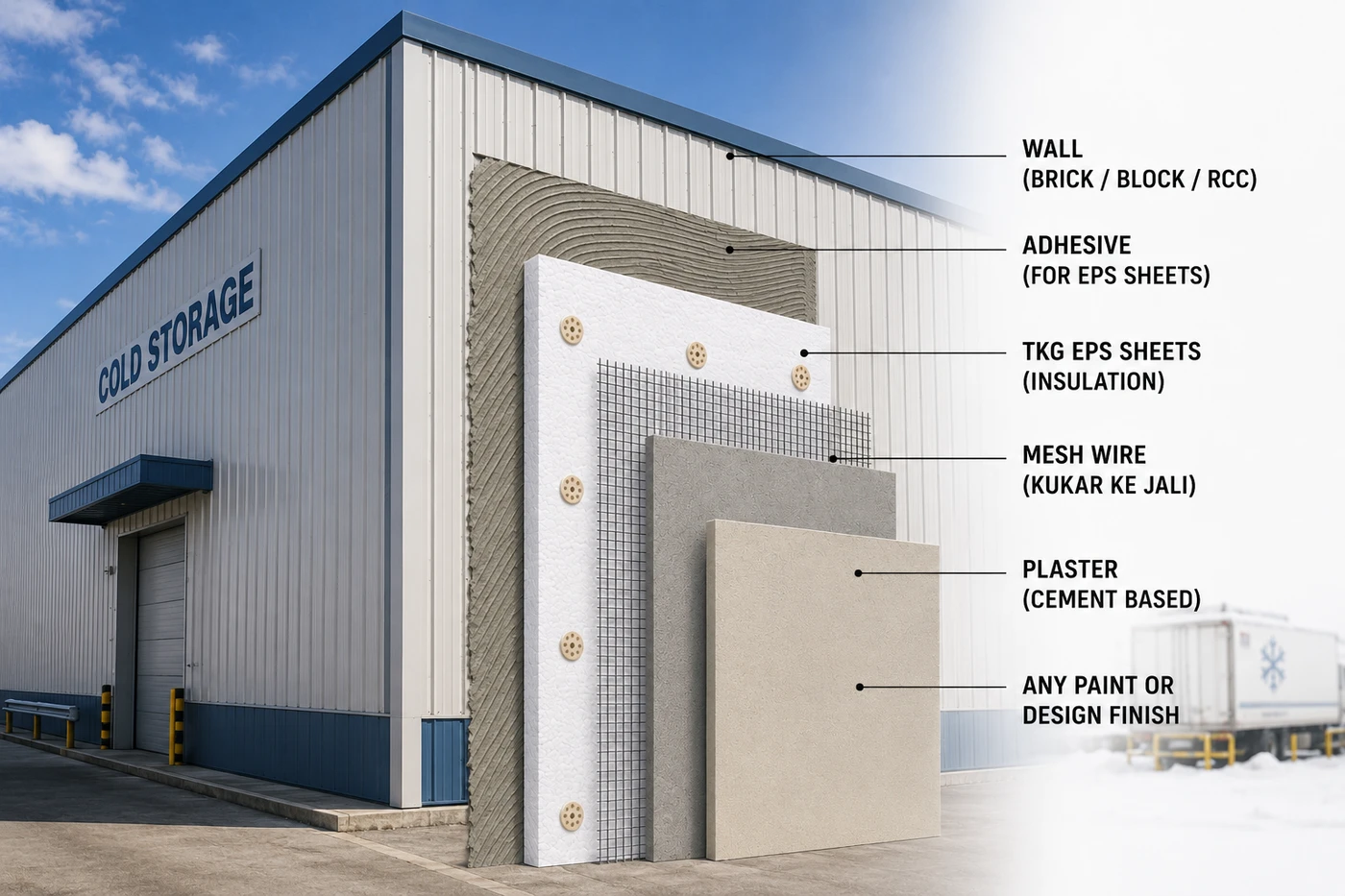
Wall Insulation
Can be done on the inside or the outside of the wall. Higher density grades handle the continuous load cold rooms put on the structure.
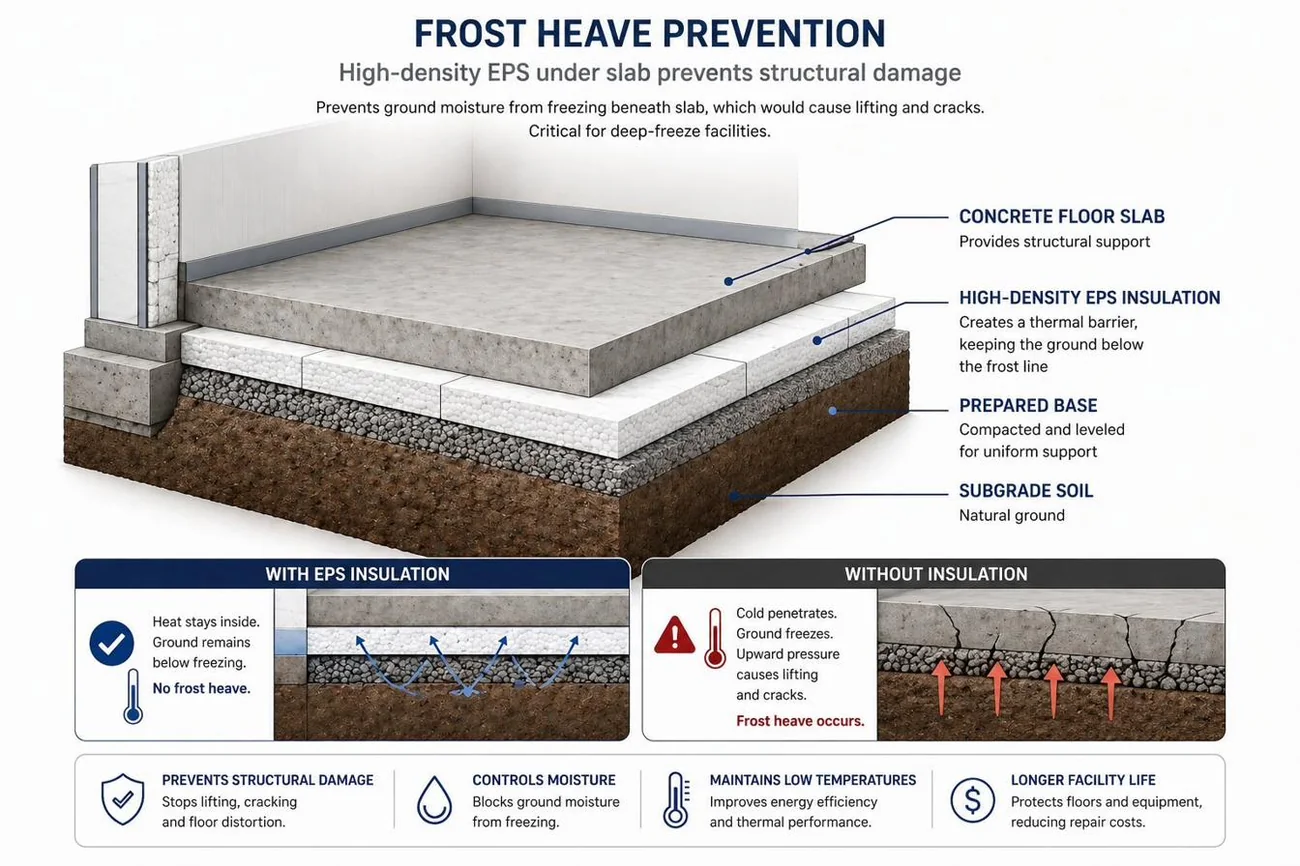
Under-Floor Frost Heave Protection
Water beneath the slab freezes, expands, and lifts the structure. TKG prevents this entirely.
Precision Temperature Control for Cold Storage
Temperature-controlled environments demand precision. TKG manufactures EPS insulation sheets that maintain stable temperatures for food storage, pharmaceutical facilities, and industrial cold storage. We work with you to specify the exact density and thickness your facility requires.
Common questions about cold storage insulation
What density do you recommend for cold storage?
24-32 kg/m³. Higher density gives compressive strength under continuous freezing cycles, excellent R-value retention in extreme cold, and resistance to frost-heave pressure.
Does it hold R-value in freezing temperatures?
Yes. EPS maintains 94%+ of its performance even at −30°C and below, ideal for pharma cold rooms, food freezers and blood-bank storage.
How does it prevent frost heave?
Under-floor insulation stops ground moisture beneath the slab from freezing and lifting the structure. For critical applications we use high-density EPS with proper vapour barriers.
Is it suitable for pharmaceutical cold storage (2-8°C)?
Yes. It's non-toxic, holds R-value precisely at 2-8°C, is non-reactive with products, and is widely used in pharma logistics. We can meet GxP compliance requirements.
More questions, including general product and roof/wall specs? See the full FAQ page.
See the FAQs →Ready to protect your cold chain?
Send your facility details, get a precise price on WhatsApp.